Rest Area History
Exploring the intersections of nature and culture on the side of the road
Rest Area History
Exploring the intersections of nature and culture on the side of the road
Exploring the intersections of nature and culture on the side of the road
Exploring the intersections of nature and culture on the side of the road

The limited access nature of Interstate Highways meant that a stop within these sites was often the only contact travelers had with regions they were passing through. Before the development of interchange business there were few options for stopping available to drivers on newly constructed stretches of Interstate Highway.
SRAs took the place of both the roadside park and the roadside store, while the sites did not allow for commercial business; they did provide a place where travelers could stop, rest, eat a picnic lunch, appreciate local landscapes and enjoy the use of comfort facilities.
The functionality of these sites made feasible the less tangible directive of connecting people with the regions they passed through; replacing the local flavor that would have once been readily accessible from the roadway.
Architecture was an essential element in developing the context of a site. Safety rest areas were designed around a central architectural theme which was established in the toilet building and then reflected in the other structures, most commonly picnic and information shelters. SRA structures and the sites on whole were to be both functionally and aesthetically satisfying, creating environments that were at once relaxing and engaging.
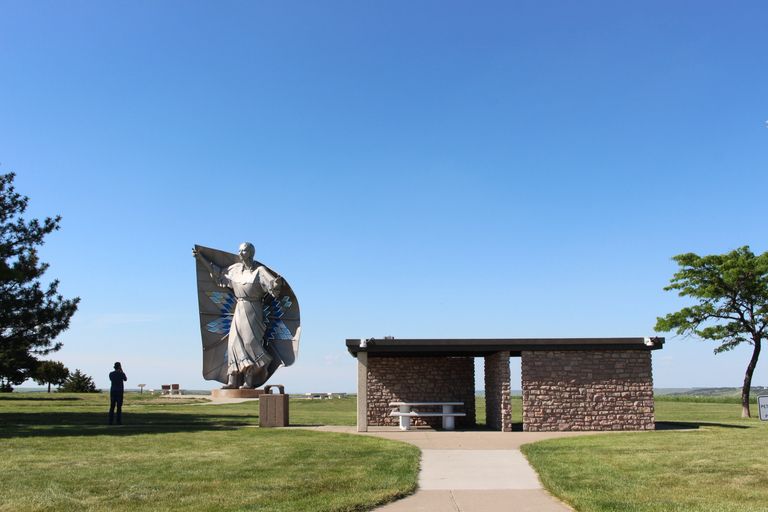
While the standard was to develop sites that reflected a cohesive design aesthetic, developers often took liberty matching modern with regional. The scale of early toilet buildings was modest, frequently exhibiting a modernist aesthetic, while picnic shelters became a means of creative articulation. Exaggerated expressions of regional flavor, approaching the monumental, manifested in picnic shelters that often became as sculptural as they were functional. Thus travelers passing though South Dakota, Oklahoma or Texas had the opportunity to eat lunch under grand tipis.
In the late 1960s the Texas DOT began including picnic areas on its interstate system to help supplement the long rural miles between off ramps and rest areas. These sites included parking and picnic areas, but not rest room facilities or running water. Many of the sites were designed in a regional theme, an attempt to reflect a regional characteristic to the traveling motorist. In several areas of southwest Texas the tipi was the image of choice. Colorful caricatures of the traditional native form, these structures, non-the-less were striking visual sign posts that rest from the highway was available. They provided a physical reprieve from high speed travel and mental reprieve from the monotony of continuous motion. And they offered a view onto the landscape as seen through ones resting eyes, a site more peaceful and impactful than the one observed though a moving window.
Safety rest areas continue to function in their original capacity, due to this; their buildings, structures and original site plans are continually threatened by redevelopment. As the demands of travelers change and increase, safety rest areas are targeted for redevelopment to meet the new needs of capacity and serviceability. However with the passage of time these sites have become more than stewards of Interstate travelers. They are important cultural landscapes, expressing the expansion of road building and the growth of leisure travel that emerged during the mid-century period. As well they articulate the desire people felt to remain personally connected to their nation even as it was growing ever more disparate; and are quirky and engaging manifestations of the mid-century’s cultural aesthetic and ideology.
Rest area history.org is dedicated to documenting and communicating the unique and significant history of Interstate safety rest areas. These sites illustrate an important aspect of the American travel experience and specifically articulate our experience of travel as it was shaped by the Interstate era beginning in the 1950s. SRAs are significant both for the nature of their off road spaces and for the architectural forms found within them. As we are gaining increased appreciation for our mid-twentieth century architectural landscape it is becoming increasingly important to look for significance in unlikely places and to recognize that many buildings constructed during this era have relevance in our lives today. The history of safety rest areas is one that we participate in each time we visit one of these sites.
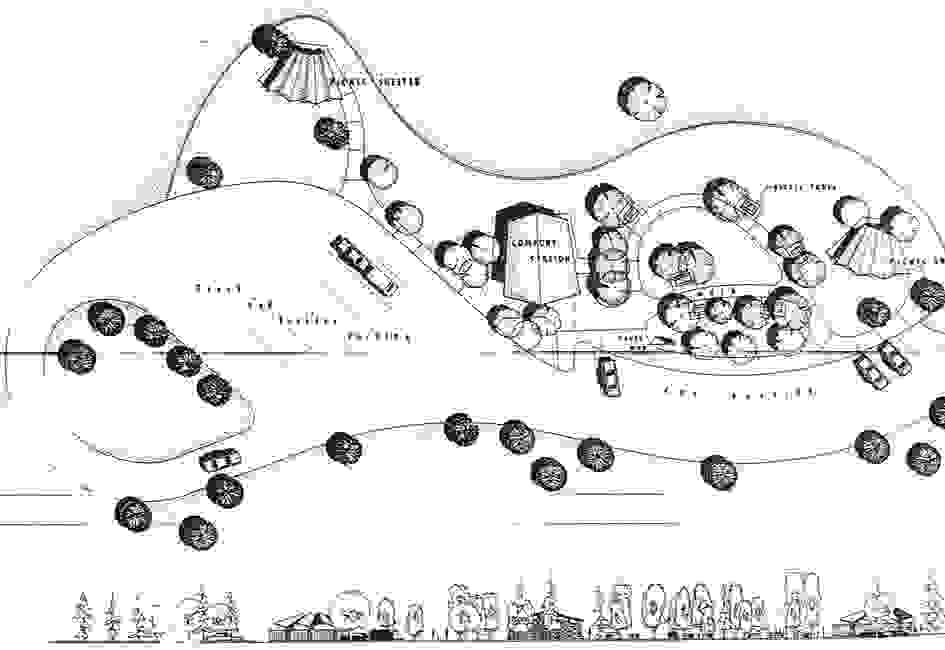
California has an extensive system of safety rest areas. Their development began in the 1960s concurrent with the construction of interstate highways in the state. As was the norm in most states, rest areas were constructed alongside highway segments, enabling them to open and serve the public along with the highway. SRAs in California are reflective of the states vast geographic diversity and colored by a straightforward modern aesthetic. As reflected in the site plan above, regionalism was primarily reflected in the use of materials and the arrangement of the site plan. Within the standards that required sites to be located at specific intervals, they were sited to showcase the landscape or immerse travelers in a particular natural area. Mountain areas made use of the topography and forested elements to enhance feelings of inclusion, while the high desert regions created places to experience and reflect on the vast open spaces that surrounded the site. Many of the original elements of California's rest areas remain intact. Providing contemporary travelers with the same regional sensibilities as well as the cultural and historic experience of the rest areas living legacy.